Neuroanatomy · A teaching atlas

See the anatomy.
Understand the connection.

Learn how the nervous system is organized, how its pathways work, and how anatomy explains clinical findings. Built for medical students, residents, and educators.
Free to explore · No account required · For education

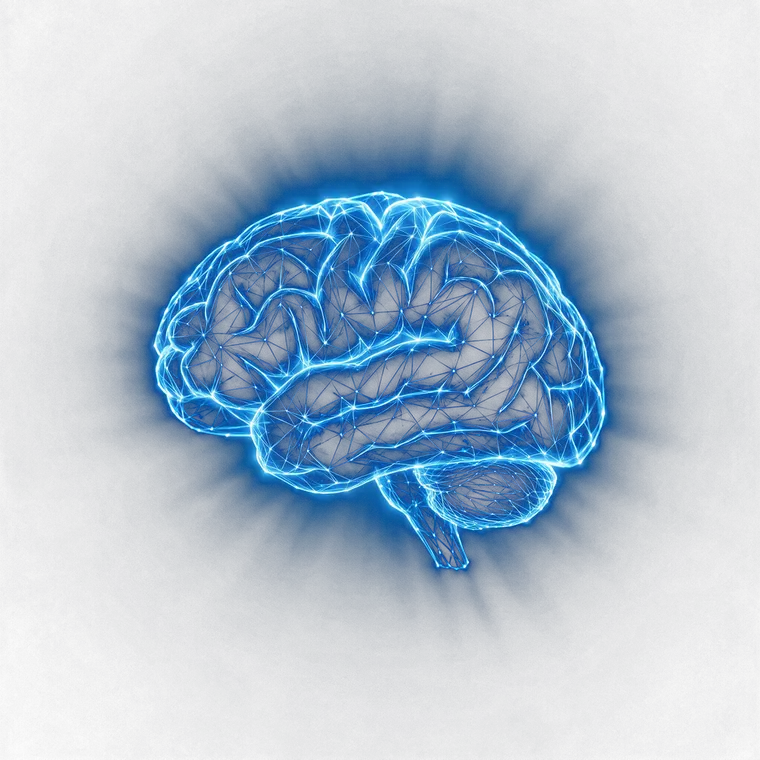
The anatomical atlasThe existing blue three-dimensional brain illustration
Structure, pathway, and function.Explore the relationships.

One subject. Connected understanding.From regional anatomy to clinical application.

Learn with guidanceShort, sequential lessons with active recall.

Explore with contextAnatomy, mechanisms, and linked sources.

The curriculum

Begin with a question.
Follow the anatomy.

Each lesson starts with an anatomical relationship and builds toward understanding. Choose a pathway to study, or use the atlas to explore a structure in detail.

A way to study

Build understanding,
one relationship at a time.

The atlas is a companion for learning and teaching neuroanatomy. Use it alongside your course materials and the cited literature.

Explore the teaching atlas
  1. Locate the structure

    Orient yourself in the anatomy, then isolate a region or reveal deeper structures.

  2. Trace the relationship

    Connect a structure to its pathways, functions, and relevant mechanisms.

  3. Apply and recall

    Work through a guided example, check your understanding, and return to the anatomy.

Neuroanatomy surface model
AZ 0° · EL 0°

CNS Atlas

Neuroanatomy for understanding. Select a structure to connect anatomy and function.
slice
Atlas controls
?
Reveal the interior
Focus a region
✕ Show all — clear focus
Systems & molecular pathways
✕ Show all systems
Vasculature
Spinal cord
Animate a signal
Activation illustrations
✕ Clear activation
White-matter tracts
L–RA–PS–I

Advanced study tools

×
Simulation — "what happens if…"
Perturb a node up or down; effects propagate along signed causal edges, decaying with distance. Green = increases, red = decreases.
Try:
IL-6 doubles Blood flow drops B12 deficiency MCA occludes
Trace a mechanism — "why…?"
Pick a cause and an effect; the graph walks the causal path between them step by step.
Try:
B12 → dorsal columns MCA stroke → aphasia amyloid-β → memory loss

×

×

Mechanism

↻ replay ✕ close
activates / drives inhibits / depletes ◦ pulse = signal travelling downstream · click any step to open it in the brain
✕ end tour
Educational connection map. Use MRI sections for internal anatomy. Sources and limitations.
Surface study colors identify whole components. Brainstem alignment is provisional; use MRI sections for location. MNI152 cortex · SUIT cerebellum (CC BY-NC) · PittBrains3D brainstem (CC BY-SA 4.0)
CNS ATLAS
loading the atlas…
×

Active recall0 / 0×
CNS Atlas
Neuroanatomy for medical students, residents & educators

What do you want to understand?

Start with a lesson or a structure. Connect its anatomy to function, follow a pathway, then check your understanding.

Reading level
Choose a guided lesson
For learning neuroanatomy. Clinical examples illustrate structure and function. Sources and limitations.
Anatomy · Function · Understanding

A teaching atlas of the human CNS

Learn neuroanatomy through guided lessons and linked atlas entries. Start with a structure, connect its function, and use clinical examples to understand localization. The map uses MRI-derived surfaces and schematic pathways.

Click any structureRead its function, anatomical connections and relevant clinical examples.
Toggle a systemFocus a functional system and compare the structures that contribute to it.
Explore an activation illustrationSee schematic task-related regions. These illustrations are not measured patient scans.
Reposition a labelDrag any labelled dot aside to see behind it; grabbing also lights its pathways.
Reveal deeper anatomyReveal the deep nuclei of the brainstem, cerebellum and thalamus.
Play a pathwayWatch a signal travel a named tract from its origin to the cortex.
Take the guided tourAuto-descend the ladder from the whole brain down to a single molecule.
Compare anatomical planesExplore axial, coronal and sagittal sections of the surface model.
Advanced tools offer exploratory mechanism tracing and graph simulation. Reading level changes the explanatory detail independently.
Read about sources and review status.